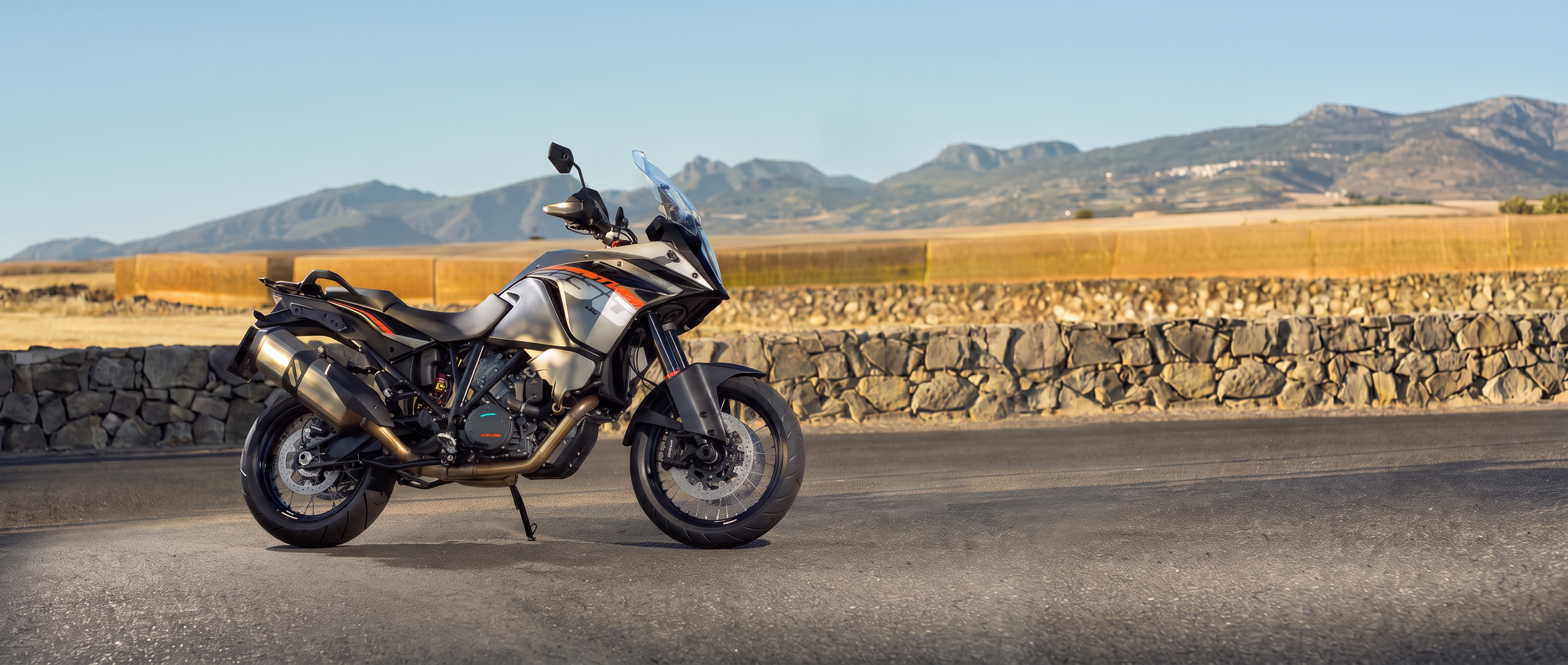
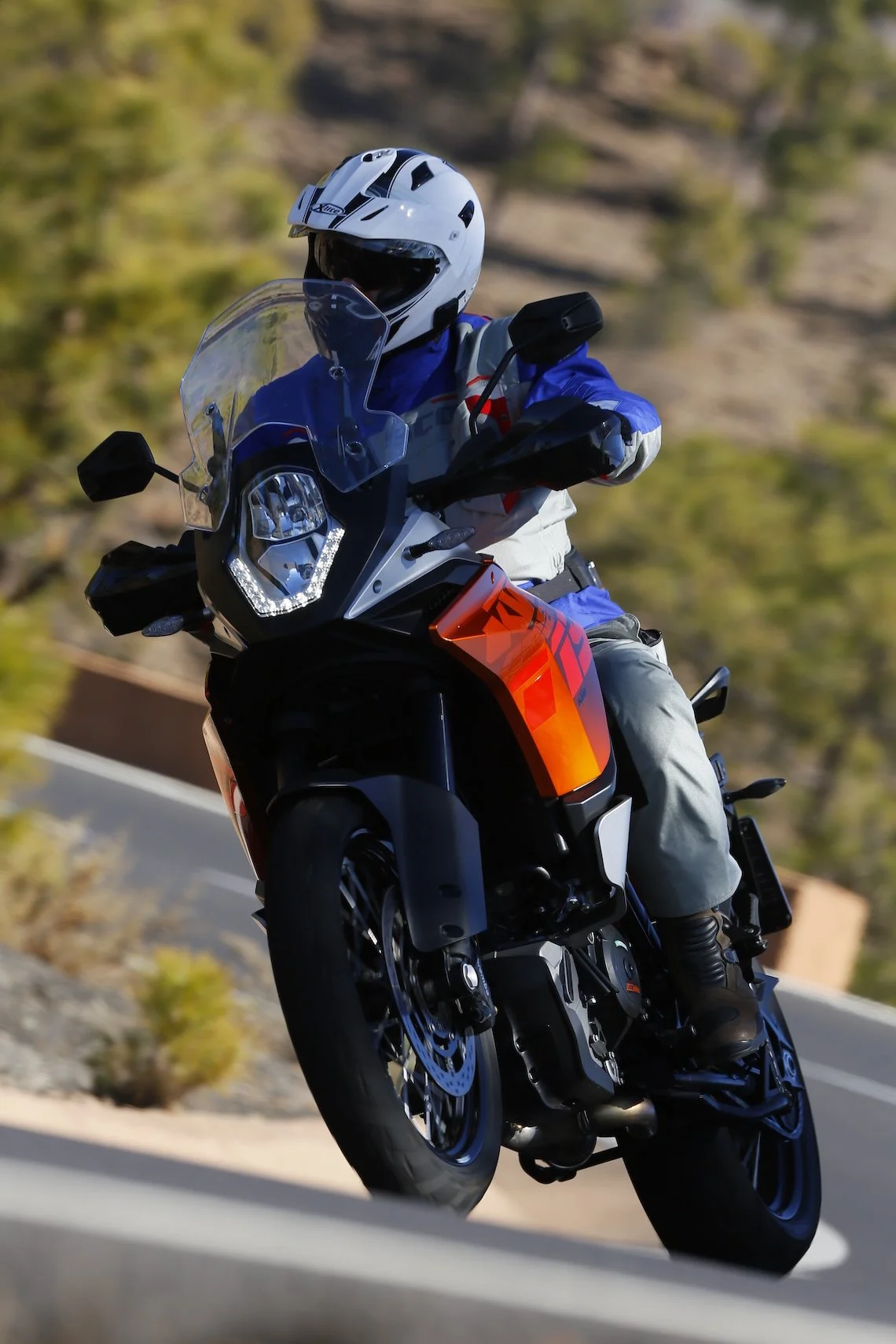
KTM 1190 Adventure
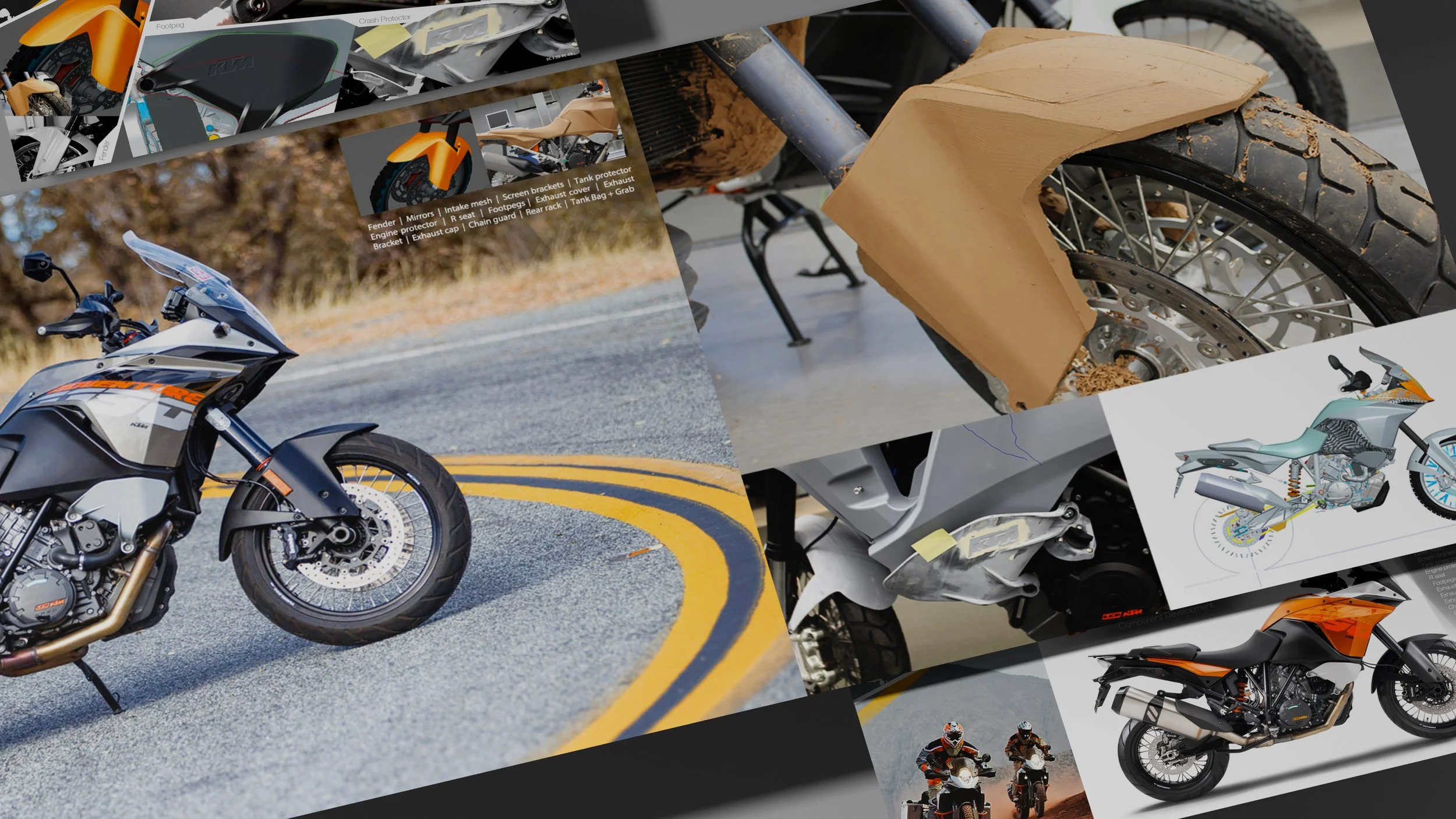
KTM’s visual product language is built around performance, honesty and a lightweight philosophy. The challenge was to evolve that language, from ground up production projects to detailed components strategy and product accessories. Focusing heavily on component strategy, the work explored how fenders, seats, protectors, racks, brackets, footpegs and other details could become a connected design system, reinforcing the character of the machine.
Working within a small design team at Kiska, alongside specialist engineering groups, the role spanned concept development, creative strategy and detail design ultimately guiding creative concepts through to production pipeline. Sketching, CAD development, visualisation and physical prototyping became tools for negotiating the space between intent and reality. Clay studies and rapid 3D-printed mock-ups exposed technical and manufacturing constraints early, while close collaboration with engineering at KTM HQ in Mattighofen ensured the original design intent was preserved as ideas moved into production.
The ambition was not simply to create distinctive parts, but to challenge assumptions about what functional components could contribute to a motorcycle’s identity. Each intervention balanced protection, ergonomics, safety and manufacturability with a sense of lightweight and honesty. The resulting execution was echoed across the KTM 1190 Adventure and wider production portfolio aligning various components into a harmonised and cohesive product vision. The work became part of a globally recognised evolution of KTM’s product language, briding the gap between engineering honesty and emotional character.